R6 Ranks in Order and Rank Distribution 2026
The R6 ranks in order are Copper, Bronze, Silver, Gold, Platinum, Emerald, Diamond and Champion. This guide lists every division and explains what Ranked 3.0 changed about placements and distribution data.
What does the R6 rank distribution look like in 2026?
The current ladder runs from Copper, Bronze, Silver, Gold, Platinum, Emerald and Diamond to Champion. Every current rank has divisions V through I. Ubisoft has not published a settled percentage table for Ranked 3.0 as of July 13, 2026. It has confirmed early clustering in higher ranks and plans to make placement matches more influential in future seasons.
All R6 ranks in order from lowest to highest
Rainbow Six Siege has eight current ranks. Progress within each rank runs from division V toward division I. Champion I is the top current division and hosts the featured leaderboard.
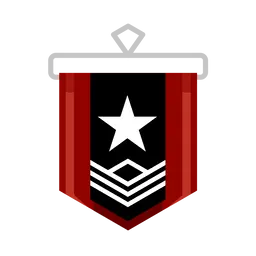 Lowest rankCopperCopper V to Copper I
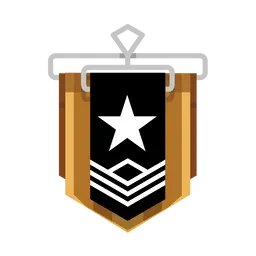 Rank 02BronzeBronze V to Bronze I
 Rank 03SilverSilver V to Silver I
 Rank 04GoldGold V to Gold I
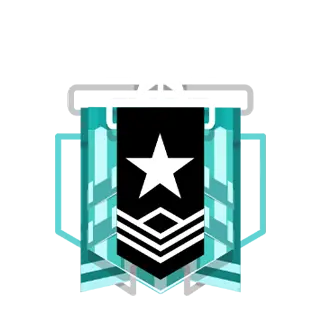 Rank 05PlatinumPlatinum V to Platinum I
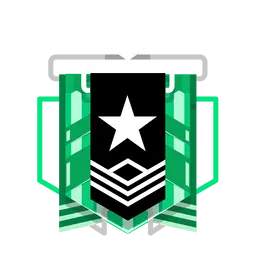 Rank 06EmeraldEmerald V to Emerald I
 Elite rankDiamondDiamond V to Diamond I
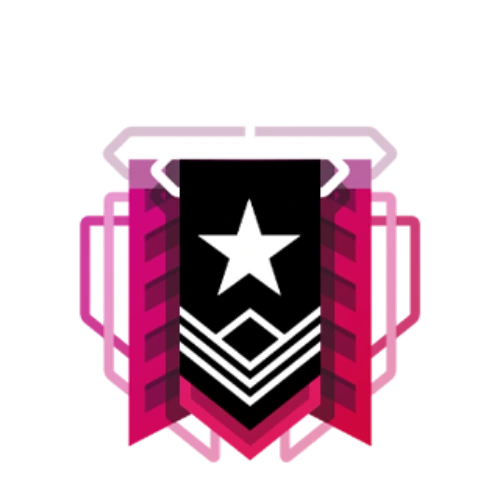 Highest current rankChampionChampion V to Champion I
There is no official Ranked 3.0 percentage table yet
Ubisoft has explained the new system and acknowledged the shape of the early ladder, but it has not released a complete percentage breakdown for Copper through Champion. A precise 2026 chart without a dated source, sample and platform is not an official distribution.
The team says this is not the intended long-term distribution.
Future seasons should create clearer starting-rank separation.
No settled Copper to Champion percentage table is available.
Tracker samples vary by date, platform and player activity.
Six changes that reshape R6 rank distribution
Ranked 3.0 launched with Operation System Override on June 2, 2026. The overhaul changed how players enter the ladder, how matches are built and how the top rank works.
Rank Points now carry the main matchmaking signal.
Every season starts with five calibration matches.
Outcome and relative team rank affect gains and losses.
Copper to Emerald use a three-rank window, Diamond and Champion use two.
The highest current rank now runs from V to I.
Every ranked match contributes to a progression track.
Why old R6 rank distribution percentages mislead in 2026
A Ranked 2.0 chart can still show historical context, but it cannot describe the current Ranked 3.0 ladder. The relationship between visible rank and matchmaking changed, placements returned and Champion gained five divisions.
Ranked 2.0 charts
Visible rank and hidden matchmaking skill could tell different stories. Old percentages belong to that system and season.
Ranked 3.0 data
Rank Points drive matchmaking. Early clustering and placement weighting are still being tuned, so timing matters.
Week one, mid-season and late-season samples can look very different.
Tracker users often represent more active ranked players.
PC and console data should not be mixed without explanation.
How placements create early high-rank clustering
Players complete five placement matches before receiving a starting rank. Ubisoft says previous-season performance influences calibration, but the first Ranked 3.0 placements did not feel influential enough. The planned response is to give them more weight in future seasons.
Fast grinders, returning players and fresh placements make early samples noisy.
Minimum gains and fairness adjustments already address progression feedback.
More placement weight should separate starting ranks more clearly.
Champion is deliberately different. Ubisoft says players cannot place directly into Champion because the rank should reflect sustained high-level performance, not one short opening sample.
How to interpret your R6 rank in Ranked 3.0
Rank is more direct than it was under Ranked 2.0, but one badge still cannot describe every part of a player or account. Read it with the context that determines how useful and believable it is.
Diamond V and Diamond I are not the same ladder position.
Match count and season history show whether the level was sustained.
A useful roster matters when your squad needs utility and role flexibility.
The wrong platform or latency can erase the practical value of a higher badge.
Champion divisions and the planned Legend Division
Ranked 3.0 split Champion into five divisions. Players climb from Champion V to Champion I, and Champion I currently hosts the featured leaderboard. This creates more separation at the top than the previous single Champion label.
Champion V to I
Champion must be earned through sustained performance. Direct Champion placement is not available.
Legend Division
Ubisoft lists Platinum or higher in Season 2, Champion in Season 3, Secure Platform and app-based two-factor authentication as requirements.
Legend is a future elite division, not a current rank to add to July 2026 distribution charts. Requirements and timing can still change before release, so Ubisoft’s live documentation remains the final source.
Check more than the rank badge before choosing
The best ranked account is the one that fits your actual queue. A higher badge loses value when the platform, region, access or operator pool does not match the way you play.
Log into the R6 account that matches your goal.
Choose the rank, inventory and platform you want.
R6 rank distribution 2026 FAQ
What are the R6 ranks in order in 2026?
The current Rainbow Six Siege ranks from lowest to highest are Copper, Bronze, Silver, Gold, Platinum, Emerald, Diamond and Champion. Each current rank has divisions V through I. Legend Division is planned for Season 3 and is not part of the current ladder as of July 13, 2026.
Is there an official R6 rank distribution percentage table for July 2026?
No settled official percentage table for every Ranked 3.0 tier had been published by Ubisoft as of July 13, 2026. Ubisoft has confirmed early clustering in higher ranks and plans to give placement matches more weight in future seasons.
What is the average R6 rank in 2026?
There is no defensible official average for the new Ranked 3.0 ladder yet because Ubisoft has not published a complete current percentage distribution. Third-party samples can differ by platform, date, match count and the type of players tracked.
What changed with R6 Ranked 3.0?
Ranked 3.0 removed hidden MMR from matchmaking, made Rank Points the main matchmaking signal, added five placement matches, introduced a competitive rewards track, added squad restrictions and split Champion into five divisions.
Does KDA affect rank in Ranked 3.0?
No. Ubisoft says KDA is not a factor in rank progression. Match outcome and relative team rank balance affect Rank Point gains and losses, so teamwork, utility and round impact matter through winning.
How do placement matches work in R6 Ranked 3.0?
Players complete five placement matches at the start of each season before receiving a starting rank. These matches have increased Rank Point gains and no squad restrictions. Previous-season performance also influences calibration.
How many Champion divisions are in R6 Ranked 3.0?
Champion now has five divisions, Champion V through Champion I. The featured leaderboard begins at Champion I until the planned Legend Division replaces it.
What is the R6 Legend Division?
Legend is a planned Season 3 division for the top of the Ranked ladder. Ubisoft lists Platinum or higher in Season 2, Champion in Season 3, R6 ShieldGuard Secure Platform and app-based two-factor authentication among its requirements.
Official R6 Ranked 3.0 references
Placements, RP matchmaking, squad rules, Champion and Legend requirements.
Placement feedback, Champion philosophy and early distribution clustering.
Season launch overview and the live Ranked 3.0 feature set.